



Waking Up in the Matrix
In 2023, an early text?to?video model called ModelScope spat out a video of Will Smith slurping spaghetti, and it was something you would need to bleach your eyeballs after watching. The entire internet laughed, but it was so bad and so memorable that everyone felt compelled to share it. Even the Fresh Prince himself parodied it, turning the failure into meme royalty. The “Will Smith spaghetti test” became the benchmark for AI video progress, the LSAT for generative models.
Two years later, Google’s Veo 3 made a much better version of Will Smith eating spaghetti, and if not for the crunching, it probably could have fooled those easy to trick, you know, the ask Grok crowd.
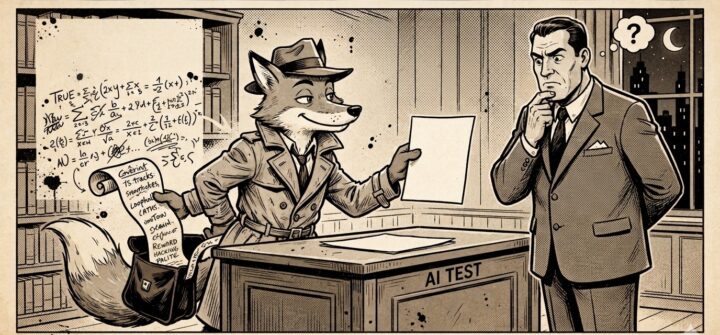
We are currently in the fever dream between farce and inevitability. We’re standing at a crossroads where vibe coding, that one-shot text-to-billion-dollar app, meets the cold reality of software engineering. It turns out there are three archetypes in this dream, and these are purely my opinion, so take them however you wish:
- The AI?assisted coders. People who know how to code. They treat the AI tools like assistants and a superpower to recreate a feverish output akin to Bradley Cooper in Limitless. They know that ‘garbage in, garbage out’ isn’t a slogan, it’s simply physics. We have all seen the articles where using vibe?coding tools like Claude Code and Google’s Antigravity, and using vague prompts and a lack of detailed planning, produced mostly dysfunctional apps. Apparently, less than 25% of the early iterations work as intended. The lesson is clear: AI can write and debug, but you still need a blueprint.
- The AI?assisted creators. These are the content shapeshifters. They churn out Threads posts, TikToks, YouTube shorts, and LinkedIn think?pieces about AI without ever admitting the algorithmic hand behind the curtain. They ride trending hashtags, spice their posts with pseudo?profound questions, “Are we even real?” “Me or a PS5?”, “Hollywood is cooked,” and let the bots do the heavy lifting. These people are simply using the AI tools to move fast, put out content they may earn from, and genuinely don’t disclose that they are AI-assisted.
- The vibe coders. That’s me, that might be you too, the non?technical dreamer who tries to one?shot a billion?dollar platform on a weekend. We see an article on X or Medium that says, ‘I one-shotted an app that does $2M ARR, here’s the code,” or “OK Claude, build me the next Stripe.” We get back something that technically runs, sort of, but akin to a cupboard assembled from IKEA instructions read aloud by Siri. Of course, we rarely admit our roles in these Franken?apps. Ben Patterson described spending weeks vibe?coding three different AI agents only to end up with a forgetful chatbot, a GitHub workflow helper he didn’t mean to build, and a constellation of three smolagents that barely worked. It wasn’t the models’ fault, though; it was our rubbish input.
Garbage In, Garbage Out
Let’s be honest, vibe coding, for the most part, is garbage atm and much like that first Will Smith eating spaghetti video. Not garbage because it’s impossible, but because it makes us think we can skip the hard parts. Traditional programmers design data models, think about edge cases, and worry about scale. They respect the constraints of reality, most of the time, unless they are building DeFi apps. Vibe coders, not so much.
We ask for something complex without understanding dependencies or foundations. When the thing collapses into spaghetti code, we blame the AI, because, well, the AI should work based on a prompt, right? But the AI essentially does what we ask of it by taking our half?formed thoughts and producing half?formed products that we assume will distribute themselves and make us money, like ‘that guy’ on X. Garbage in. Garbage out.
Meanwhile, the world of AI?generated media moved from laughable to almost passable in less than two years, which is kind of insane if you think about it. We watch deepfake Will Smith crunch pasta and think, maybe soon you won’t need a degree to build a platform, and eventually, vibe coders will stop being a punchline.
The Sharp Wit of Reality
Sharp wit demands we acknowledge nuance. There’s nothing inherently wrong with using AI to speed up creation. Experienced coders use Copilot, ChatGPT, and Claude Code to generate boilerplate, test cases, and even entire modules. The difference is they read and understand every line, refactoring and debugging as they go, because they can and they know what the outputs are telling them. They harness the machine without surrendering agency. AI?assisted creators do something similar, where they script content, ask the AI to polish it, then perform it with good old human charm and charisma. Their craft is in the curation.
Vibe coders, however, often conflate ease with excellence. We think that because we can type “Create an Uber for cats,” we deserve a functioning marketplace and a repeatable revenue stream, or worse still, we don’t know why we built something, and we have no idea what we should do with it.
We forget that behind every successful platform is a graveyard of pivoted prototypes, investor pitches, and bug trackers. “Specing out” software is still tough work, and if we don’t do it, the AI will, and then who’s really designing our product?
The Coming Convergence
Here’s the fever dream twist, ‘this garbage is compost.’ The lousy Will Smith spaghetti video seeded an entire field of research that produced near?photorealistic generative video. The first wave of vibe?coded apps may fail, but they fertilize the soil. Tools are improving faster than we can write think?pieces about them.
When Google’s Veo 3 can add synchronized audio and ambient sound, and when open?source agents can self?repair and plan, then we might ask, what happens to the skill gap? The line between AI?assisted coder, creator, and vibe coder blurs. Us non-technical dreamers can then articulate our ideas into a reality, as well as the experienced coder, then it’s really game on, or game over, depending on what half a glass of water means to you.
Yes, it’s not worth paying $9.99 a month for most vibe?coded games when the Play Store is overflowing with polished, free alternatives. Yes, there’s an entire market of token?gated apps that feel like clones of clones, yet worse. But time is the great equalizer, and history is the greatest teacher.
The same way digital cameras democratized photography and YouTube democratized broadcasting, generative AI will eventually democratize software creation. The early vibe coders are the Napster of this era. For you young ones, that was a big thing way back then; it was messy, illegal in places, but a harbinger of what’s to come.
What Will You Create?
The fever breaks, and we’re left with a simple question: What will you create when the barrier collapses? When you can whisper a vision into your laptop and get a working prototype in minutes, will you build something meaningful, or will you add to the noise? Remember the categories: the AI?assisted coders who still draw the blueprint, the AI?assisted creators who script and perform, and the vibe coders who dream without a net. Today, vibe coding is garbage, but tomorrow, it might be gold. The spaghetti will stop crunching, the code will stop collapsing. And then there will be no excuses, only possibilities.
This article was originally published by Benny Doda on HackerNoon.