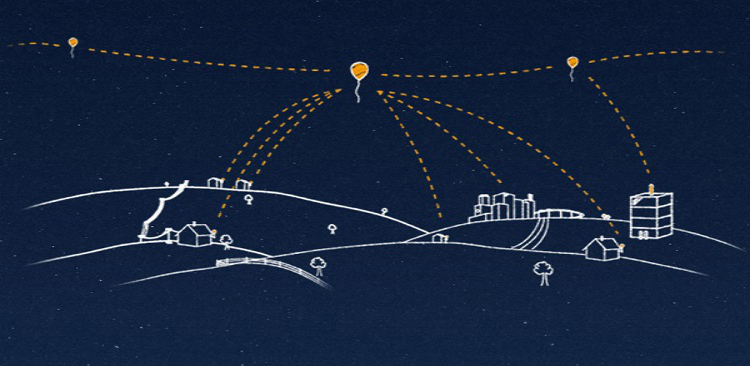
Project loon is google’s potentially world-changing efforts since it could bring millions of people in remote places online for the first time, but many have wondered how the floating, mesh-like network could deliver stable Internet coverage when taking into account factors like wind.
The company says it found inspiration from nature and the way that birds flock together when they fly.
“They [the balloons] look at their near-neighbors and tried to spread each other out nicely,” says ‘Dan’, who on the Rapid Evaluation team at Google. “But as we move forward, we may use methods that take into account everything. So every balloon essentially will have information about what every other balloon is doing. In future, it will probably be a much more sophisticated simulation.”
Dan says that once they found that balloons could be spaced out and intelligent, Loon grew into “a feasible project not just some crazy science project.”
In this video he shows a simulation program that demonstrate how the balloons react to conditions around them and flock to ensure there are no gaps in their coverage.
Loon has been tested in New Zealand, and its expanding to California where Google is seeking volunteers to try out its ground-based modems.
Via: TheNextWeb
Image Credit: foxshuo
We built one platform. They experience six. I thought I understood how our data platform…
India’s startup journey has moved quickly. In just the last decade, it has grown into…
The advancement of artificial intelligence from an experimental stage to a significant driving force has…
The Tech Panda takes a look at recent tech launches. Cybersecurity: Commercial Launch of Embedded…
Telecom operators are entering a pivotal phase, where their future role in the AI economy…
In global financial system, while traditional banks once dominated the flow of credit and capital,…